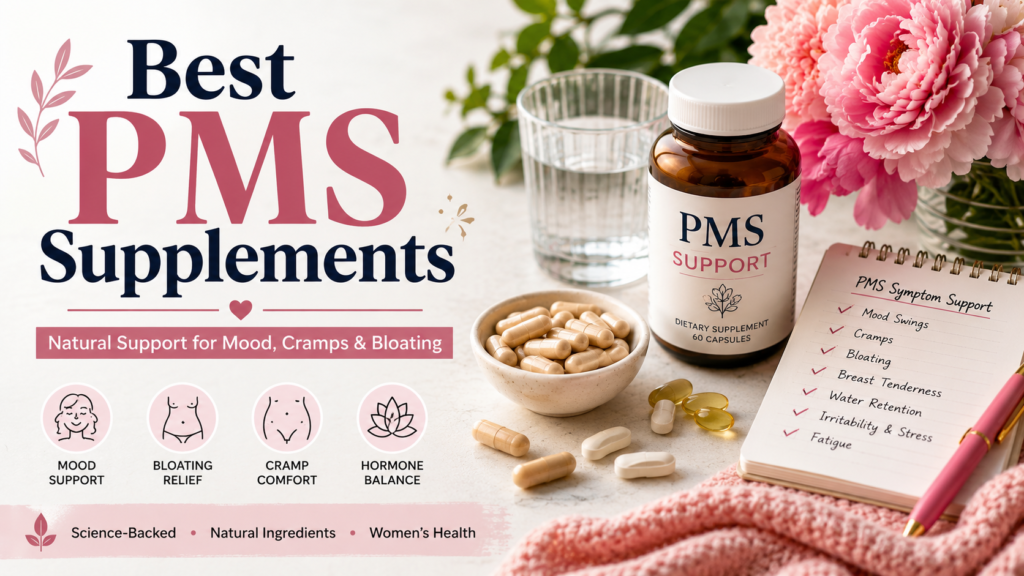
Premenstrual syndrome, or PMS, can make the days leading up to your period tough. Cramps, bloating, tender breasts, wanting certain foods, feeling tired, being easily upset, and changes in mood can all make it harder to handle everyday tasks.
For some women, taking PMS supplements can offer extra help. However, some supplements don’t have strong proof that they really work. Some nutrients show more encouraging research findings, while some herbal products have unclear or mixed results.
So, which supplements are worth considering?
This guide covers 7 PMS supplements that are often used to help with premenstrual symptoms, what the studies have found about them, and important things to think about before including them in your daily routine.
Important: Supplements are not a sure way to treat PMS. Before you begin taking a new supplement, it’s a good idea to talk with your doctor or pharmacist, especially if you’re currently on any medication, if you’re pregnant, if you’re trying to get pregnant, or if you have any existing health issues.
1. Calcium May Support PMS Relief
Calcium is one of the most studied nutrients when it comes to helping with PMS symptoms.
Research cited by the U.S. The Office on Women’s Health says that calcium might help reduce some PMS symptoms like tiredness, wanting to eat more, and feeling sad.(Office on Women’s Health)
Calcium is also very important for the proper working of muscles, nerves, and bones. So, it’s really important to get enough calcium no matter if you have PMS or not.
Good food sources include:
- Milk
- Yogurt
- Cheese
- Fortified plant-based milk
- Calcium-fortified foods
- Some leafy green vegetables
A supplement may be useful if your diet does not provide enough calcium.
Some clinical guidance has discussed approximately 1,200 mg of total calcium per day in relation to PMS and PMDD symptom relief. However, that does not mean everyone should automatically take 1,200 mg from supplements. Your total intake from food and supplements matters. (Mayo Clinic)
What to look for
When shopping for a calcium supplement, check the amount of elemental calcium rather than simply the total compound weight.
Calcium carbonate and calcium citrate are two common forms. Calcium carbonate is generally taken with food, while calcium citrate can be taken with or without food. (Mayo Clinic)
2. Vitamin B6 May Help With Mood Symptoms
Vitamin B6 is another popular ingredient in PMS supplements.
The Office on Women’s Health notes that studies have found vitamin B6 may help with symptoms such as moodiness, irritability, forgetfulness, bloating, and anxiety. (Supplement with omega 3)
Vitamin B6 naturally occurs in foods such as:
- Fish
- Poultry
- Potatoes
- Bananas and other non-citrus fruits
- Fortified cereals
Because vitamin B6 is water-soluble, more is not necessarily better.
Avoid taking very high doses simply because a supplement promises stronger results. Excessive long-term intake of vitamin B6 can cause nerve problems.
For that reason, check the serving size carefully and avoid combining multiple supplements that contain large amounts of vitamin B6.
3. Magnesium May Support Certain PMS Symptoms
Magnesium is frequently included in formulas marketed for PMS.
Some research suggests magnesium may help certain symptoms, although the evidence is mixed. The Office on Women’s Health notes that magnesium may be useful for some symptoms, including menstrual migraines. (Office on Women’s Health)
Magnesium is naturally found in:
- Spinach
- Almonds
- Cashews
- Pumpkin seeds
- Whole grains
- Beans
Some women choose a magnesium supplement when their diet is low in magnesium.
However, magnesium supplements can cause digestive side effects, particularly at higher doses. People with certain medical conditions may also need to avoid or limit supplementation.
Therefore, speak with a healthcare professional before using magnesium specifically for PMS.
4. Omega-3 Fatty Acids May Help With Cramps
Omega-3 fatty acids are another ingredient worth considering when comparing PMS supplements.
Omega-3s are found naturally in fatty fish such as salmon, sardines, and mackerel. They are also available in fish oil and algae-based supplements.
The Office on Women’s Health reports that research on polyunsaturated fatty acids, including omega-3 and omega-6 fatty acids, suggests that supplementation may help reduce cramps and some other PMS symptoms. (Office on Women’s Health)
However, the quality and dosage of products can vary.
If you already eat fatty fish regularly, you may not need a high-dose supplement.
Fish oil or algae oil?
Fish oil provides EPA and DHA.
Algae-based omega-3 supplements can provide DHA and may be a useful option for people who avoid fish.
When comparing products, look at the actual EPA and DHA amounts instead of focusing only on the total amount of “fish oil.”
5. Chasteberry Is Popular but Needs Caution
Chasteberry, also called Vitex agnus-castus, is a herbal ingredient found in some PMS supplements.
Some research suggests it may help certain premenstrual symptoms, including irritability, mood changes, breast tenderness, swelling, cramps, and food cravings. However, more research is needed. (Mayo Clinic)
Chasteberry is not appropriate for everyone.
It may interact with medications or hormonal treatments. The Office on Women’s Health specifically advises caution, including for people using hormonal birth control or hormone therapy. (Office on Women’s Health)
If you are considering a chasteberry supplement, talk with your healthcare professional first.
6. Vitamin E May Be Considered for Specific Symptoms
Vitamin E is another ingredient sometimes included in PMS formulas.
Some studies have explored vitamin E for PMS symptoms, particularly breast tenderness. However, evidence for vitamin supplements overall is not as strong as consumers may assume. Mayo Clinic notes that evidence for vitamin E, magnesium, vitamin B6, and similar supplements varies and can be limited. (Mayo Clinic)
Vitamin E can be obtained through foods such as:
- Almonds
- Sunflower seeds
- Avocado
- Vegetable oils
- Peanuts
- Spinach
Food should generally be your first source of nutrients.
If you choose a supplement, avoid assuming that a higher dose will produce better results.
7. Evening Primrose Oil Has Mixed Evidence
Evening primrose oil is often promoted as a natural option for PMS and breast tenderness.
It contains gamma-linolenic acid (GLA), an omega-6 fatty acid.
However, the evidence is not particularly convincing. The Office on Women’s Health describes research results for evening primrose oil and PMS as mixed. (Office on Women’s Health)
Mayo Clinic’s current overview is even more cautious, noting that most research has found little to no benefit from evening primrose oil for PMS. (Mayo Clinic)
Therefore, it should not automatically be considered one of the best PMS supplements simply because it is marketed as “natural.”
How to Choose the Best PMS Supplements
Choosing a PMS supplement can be confusing because many products contain long ingredient lists.
Instead of choosing the product with the most ingredients, look for a formula with transparent labeling.
1. Check the Supplement Facts
Look for:
- Exact ingredient amounts
- Serving size
- Vitamin and mineral amounts
- Herbal extract amounts
- Manufacturer information
- Directions for use
Avoid products that hide their quantities inside proprietary blends.
2. Look for Third-Party Testing
Quality can vary between supplement manufacturers.
When possible, look for products tested by reputable independent organizations such as USP, NSF, or ConsumerLab.
Third-party testing can provide additional information about product quality, purity, and potency.
3. Avoid Mega-Doses
More is not always better.
A supplement containing extremely high amounts of several vitamins and minerals may not be safer or more effective.
For example, taking several products containing vitamin B6 can unintentionally push your intake much higher than intended.
4. Consider Your Main PMS Symptoms
Not every PMS symptom requires the same approach.
If your biggest problems are:
Cramps:
Consider discussing calcium, magnesium, or omega-3 options with a healthcare professional.
Bloating:
Magnesium may be worth discussing, while reducing excess sodium can also help with water retention. (Mayo Clinic)
Mood changes:
Calcium and vitamin B6 have some evidence for certain PMS-related mood symptoms. (Office on Women’s Health)
Breast tenderness:
Talk with your healthcare professional before choosing a supplement specifically for this symptom.
Are PMS Supplements Better Than Food?
Not necessarily.
Food should usually be the foundation of your nutrition.
A balanced diet can provide calcium, magnesium, vitamin B6, vitamin E, omega-3 fatty acids, and many other nutrients.
For example, you could build a PMS-friendly eating pattern around:
- Leafy green vegetables
- Yogurt or fortified alternatives
- Eggs
- Fish
- Nuts and seeds
- Whole grains
- Beans
- Fruits
- Vegetables
Mayo Clinic also recommends dietary strategies such as eating smaller, more frequent meals, limiting salty foods, choosing complex carbohydrates, and consuming calcium-rich foods as part of PMS self-care. (Mayo Clinic)
Can Supplements Cure PMS?
No.
PMS supplements may help some symptoms, but they should not be presented as a cure.
PMS can involve physical and emotional symptoms related to the menstrual cycle. Symptoms can also vary significantly from one person to another.
Lifestyle changes can be important too.
Regular exercise, adequate sleep, stress management, and a balanced diet may help reduce some PMS symptoms. (Mayo Clinic)
Keeping a symptom diary for several menstrual cycles can also help you identify patterns.
When Should You Talk to a Doctor?
Occasional PMS symptoms are common, but severe symptoms should not simply be ignored.
Speak with a healthcare professional if symptoms:
- Interfere with work or school
- Affect relationships
- Become difficult to manage
- Are getting worse
- Continue outside the premenstrual period
- Cause severe mood changes
Severe emotional symptoms may be associated with premenstrual dysphoric disorder (PMDD), which is more serious than typical PMS and may require professional treatment. Mayo Clinic notes that PMDD treatment can include prescription medications, hormonal treatments, lifestyle changes, and sometimes nutritional supplements. (Mayo Clinic)
If you experience thoughts of harming yourself, seek urgent professional help immediately.
What Is the Best PMS Supplement?
There are multiple variations of PMS supplements, each with its own benefits.
Calcium is a commonly discussed nutrient by medical professionals, while vitamins B6 and magnesium may also be effective in treating certain symptoms. The Office of Women’s Health has reported that there is some research supporting omega-3 fatty acids.
There are herbal products, like chasteberry, that can benefit some women but caution when using them as they may cause a reaction to other drugs.
Evening primrose oil has been shown to have a beneficial effect on PMS symptoms, but the evidence is not convincing.
Instead of selecting the most concentrated supplement, choose one that corresponds to your specific symptoms and eating habits, as well as your health goals and any medications you are taking.
Final Thoughts
Some women may benefit from the appropriate PMS supplements, but these drugs are only a small part of managing premenstrual symptoms.
Certain nutrients, including calcium, vitamin B6, magnesium and omega-3 fatty acids, have some evidence of use, but the evidence is less clear for herbal options such as chasteberry or evening primrose oil.
It is important to review the ingredients, serving size, dosage, and quality of supplements before purchasing them. If you are taking medication or experiencing PMS symptoms, consult a doctor beforehand. Assistance is essential. What should be done?
Frequently Asked Questions
What vitamins are best for PMS?
Calcium and vitamin B6 have evidence suggesting they may help certain PMS symptoms. Magnesium and vitamin E have also been studied, but evidence is more variable. (Office on Women’s Health)
Does magnesium help PMS?
Magnesium may help some PMS symptoms, but research results are mixed. It may be particularly worth discussing with a healthcare professional if migraines occur around your period. (Office on Women’s Health)
Can calcium help PMS symptoms?
Yes. Studies suggest calcium may reduce some symptoms, including fatigue, cravings, and depressed mood. However, your total calcium intake from food and supplements should be considered before adding a supplement. (Office on Women’s Health)
Is vitamin B6 good for PMS?
Vitamin B6 may help certain symptoms, including moodiness, irritability, bloating, and anxiety. Avoid excessive doses and check whether other supplements you take already contain vitamin B6. (Office on Women’s Health)
Is chasteberry safe for everyone?
No. Chasteberry can interact with medications and may not be appropriate for people using hormonal birth control or certain hormone therapies. Ask a healthcare professional before using it. (Office on Women’s Health)
How long does PMS last?
PMS symptoms commonly occur during the days before menstruation and improve after the period begins. If symptoms persist throughout the month or severely interfere with daily life, speak with a healthcare professional.