
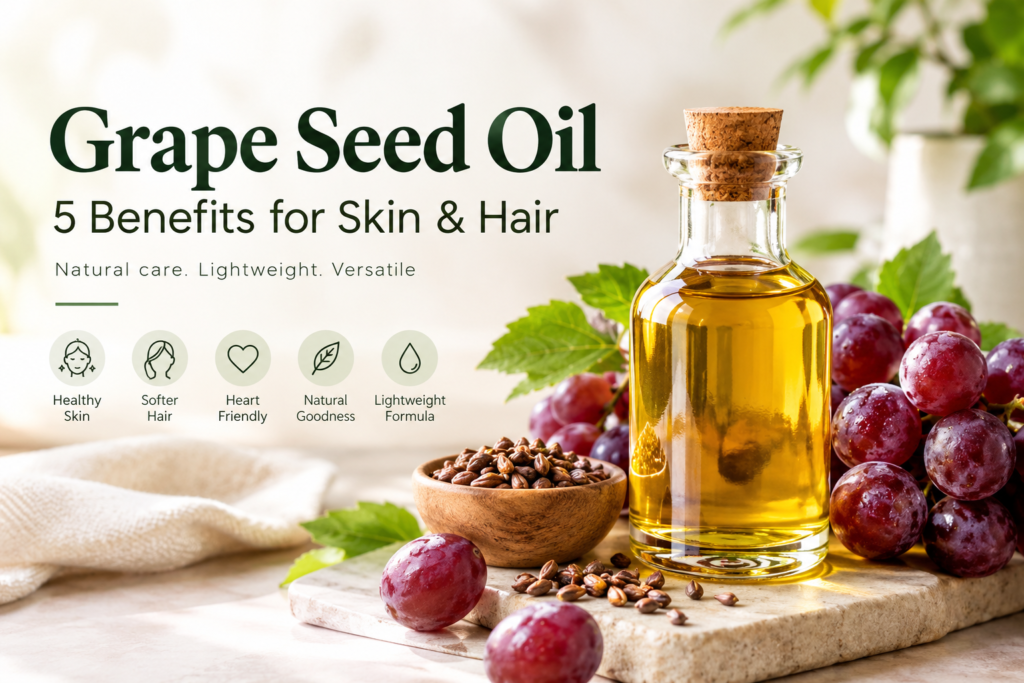
Grape Seed Oil: Benefits for Skin, Hair, and Everyday Wellness
Grape seed oil is a light plant oil derived from the seeds of grapes. It is widely used in skincare, hair care, massage products, and cooking due to its smooth texture and balanced fatty acid composition. This makes it an excellent choice for those seeking an oil suitable for everyday use.
What distinguishes it from other plant oils? Can it help maintain hydration for dry skin, promote healthier hair, or contribute to a balanced diet?
This guide explores the potential benefits of grape seed oil, how to use it effectively, what research has shown, and factors to consider when purchasing a high-quality product.
What Is Grape Seed Oil?
Grape seed oil is extracted from the tiny seeds left after grapes are processed for wine or other products. Manufacturers employ various extraction methods, including cold pressing or using solvents to dissolve the oil.
The oil contains linoleic acid, an omega-6 polyunsaturated fatty acid, along with smaller amounts of other fatty acids and natural compounds. Some varieties also include vitamin E and other antioxidants, though these amounts can vary based on the product and extraction method.
Grape seed oil is available in different forms:
- Cosmetic grape seed oil : Designed for skin or hair application.
- Culinary grape seed oil : Specifically made for cooking purposes.
- Grape seed extract : A separate product derived from grape seeds that contains specific compounds called proanthocyanidins.
These products are not interchangeable; grape seed oil should not be assumed to provide the same benefits as grape seed extract.
5 Potential Benefits of Grape Seed Oil
1. Helps Moisturize Dry Skin
Grape seed oil is often used to keep the skin soft and hydrated. Its fatty acids can enhance the skin’s ability to retain moisture by supporting its protective barrier. A strong skin barrier helps trap moisture and shields the skin from environmental stressors. That is an ideal option for those preferring a lighter oil over a heavier cream. However, individual skin needs may vary, and some may require a richer moisturizer for very dry skin.
How to use it: Apply a few drops to slightly damp skin after cleansing or over a water-based moisturizer to prevent moisture loss.
2. Supports Softer, Smoother-Looking Skin
The linoleic acid present in grape seed oil helps maintain the skin’s natural barrier function. A healthy skin barrier contributes to a softer and more comfortable feel, and the oil may help smooth out rough patches. However, scientific evidence regarding significant improvements in skin appearance is limited. Consider it a moisture enhancer rather than a guaranteed solution for skin issues.
3. May Help Hair Feel Softer
Grape seed oil is sometimes incorporated into hair care routines due to its lightweight texture, which can help soften dry hair. It is particularly beneficial for those who find it difficult to wash out heavier oils, as a small amount can help hydrate the ends and lengths of the hair. However, there is insufficient evidence to confirm that promotes hair growth or prevents hair loss, so it should not replace proven treatments for thinning hair.
How to use it: Apply one or two drops to your palms and rub it into the ends of dry or damp hair, adjusting the amount based on your hair’s length and thickness.
4. Contains Unsaturated Fatty Acids
Culinary grape seed oil is rich in polyunsaturated fats, especially linoleic acid. Integrating unsaturated oils into your diet instead of saturated fats can contribute to heart health. However, overall dietary balance is more important than any single oil, and that is still calorie-dense. For cooking, choose an oil that suits the heat and cooking method, avoiding reusing oil that has started to smoke.
5. Offers a Lightweight Option for Massage
Grape seed oil glides smoothly over the skin, making it a popular choice as a carrier oil for massages and skincare. It enhances the massage experience while leaving the skin feeling soft and gentle. Many people appreciate its lighter feel compared to other plant oils. If used with essential oils, always follow the dilution guidelines from the essential oil manufacturer, as essential oils should never be applied directly to the skin without dilution.
Is That Good for All Skin Types?
While a product may work for many individuals, not every skincare ingredient is suitable for everyone.
- For oily skin: its light texture might feel nice but may not effectively control excess oil or prevent acne.
- For dry skin: it can provide softness, especially when applied after a moisturizer. However, extremely dry skin may benefit more from creams containing ingredients like glycerin or ceramides.
- For sensitive skin: individual reactions may vary, so it’s wise to patch test before widespread use.
Overall, grape seed oil offers a range of beneficial properties, but personal skin and hair needs should guide its use.
Final Thoughts: Is Grape Seed Oil Worth Trying?
That is a good choice for people who want a light oil to use on their skin, hair, for massage, or when cooking. Its fat content helps it work as a skin conditioner, and when it’s safe to eat, it can add healthy fats to your meals.
Still, it is not a miracle ingredient. There is not enough clear proof to support claims about anti-aging, acne treatment, skin brightening, and hair growth.
Pick a good product that works for what you need, start using it slowly, and stick to a regular skincare routine along with a healthy lifestyle.
Ready to explore more skincare ingredients? Check out our related guide on picking the best moisturizer for healthy, glowing skin and find out easy ways to create a simple daily skincare routine.
Disclaimer: This article is for informational purposes only and is not a substitute for professional medical advice, diagnosis, or treatment.