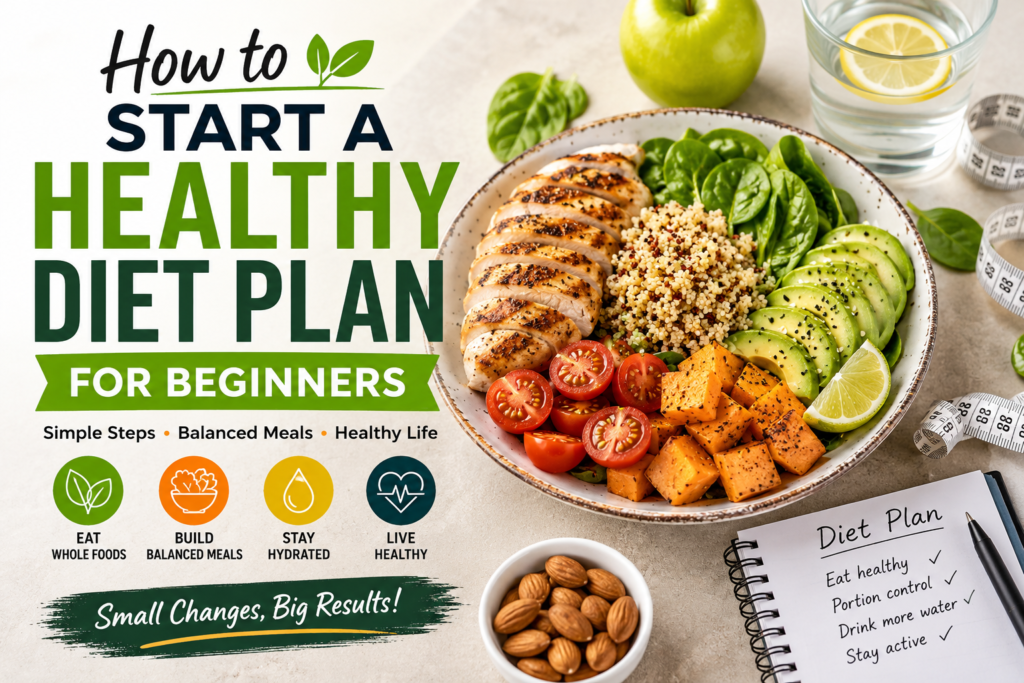
How to Start a Healthy Diet Plan for Beginners
Starting a healthy diet plan for beginners can feel confusing. With countless diets, nutrition trends, and conflicting advice online, many people don’t know where to begin.
The truth is that a healthy diet isn’t about starving yourself, eliminating entire food groups, or following extreme restrictions. A successful healthy diet plan focuses on balanced nutrition, sustainable habits, and consistency.
Whether your goal is weight loss, increased energy, better health, or improved fitness, this guide will show you exactly how to create a healthy diet plan that works.
Why a Healthy Diet Plan Is Important
A healthy diet provides your body with the nutrients it needs to function properly. The foods you eat affect your energy levels, immune system, metabolism, and overall well-being.
Benefits of following a healthy diet include:
- Better weight management
- Increased daily energy
- Improved digestion
- Reduced risk of chronic diseases
- Better heart health
- Stronger immune system
- Improved mental focus
- Healthier skin and hair
The good news is that you don’t need to be perfect. Small improvements can lead to significant results over time.
Step 1: Focus on Whole Foods
The foundation of every healthy diet plan for beginners is eating more whole foods.
Whole foods are foods that are minimally processed and rich in nutrients.
Examples include:
Vegetables
- Broccoli
- Spinach
- Carrots
- Bell peppers
- Kale
Fruits
- Apples
- Bananas
- Berries
- Oranges
- Grapes
Lean Proteins
- Chicken breast
- Turkey
- Fish
- Eggs
- Greek yogurt
Healthy Carbohydrates
- Brown rice
- Oats
- Sweet potatoes
- Quinoa
- Whole-grain bread
Healthy Fats
- Avocados
- Nuts
- Seeds
- Olive oil
- Fatty fish
Whole foods provide vitamins, minerals, fiber, and antioxidants that support overall health.
Step 2: Build Balanced Meals
A common mistake beginners make is focusing only on calories.
Instead, focus on creating balanced meals that include:
Protein (25-30%)
Protein helps maintain muscle mass and keeps you feeling full longer.
Good sources include:
- Chicken
- Fish
- Eggs
- Tofu
- Greek yogurt
- Lean beef
Healthy Carbohydrates (40-50%)
Carbohydrates are your body’s primary energy source.
Choose:
- Oatmeal
- Brown rice
- Whole grains
- Fruits
- Vegetables
Healthy Fats (20-30%)
Healthy fats support brain function and hormone production.
Examples:
- Avocados
- Almonds
- Walnuts
- Olive oil
- Salmon
A balanced plate should contain protein, vegetables, healthy carbohydrates, and healthy fats.
Step 3: Drink More Water
Hydration is often overlooked in nutrition plans.
Water helps:
- Improve digestion
- Support metabolism
- Regulate body temperature
- Reduce unnecessary snacking
- Improve exercise performance
Most adults should aim for:
- Women: 2–3 liters daily
- Men: 3–4 liters daily
If plain water feels boring, try:
- Lemon water
- Cucumber water
- Herbal tea
- Sparkling water without sugar
Step 4: Reduce Added Sugar
Excess sugar consumption contributes to weight gain and other health issues.
Common sources include:
- Soft drinks
- Energy drinks
- Candy
- Cakes
- Cookies
- Sweetened coffee drinks
Instead, choose healthier alternatives:
- Fresh fruit
- Greek yogurt
- Dark chocolate
- Homemade smoothies
Reducing sugar intake is one of the fastest ways to improve your overall diet quality.
Step 5: Learn Portion Control
Even healthy foods can contribute to weight gain if eaten in excessive amounts.
Simple portion-control tips include:
- Use smaller plates
- Eat slowly
- Avoid distractions while eating
- Stop when you’re 80% full
- Measure servings initially
Mindful eating helps you recognize hunger and fullness signals more effectively.
Step 6: Plan Meals in Advance
Meal planning is one of the most effective habits for long-term success.
Benefits include:
- Less stress
- Better nutrition
- Reduced food waste
- Lower grocery costs
- Fewer unhealthy food choices
Simple Weekly Meal Plan Example
Breakfast
Oatmeal with berries and almonds
Lunch
Grilled chicken, brown rice, and vegetables
Dinner
Salmon with sweet potatoes and broccoli
Snacks
Greek yogurt, fruit, or nuts
Preparing meals ahead of time makes healthy eating easier during busy weeks.
Step 7: Include Regular Physical Activity
Nutrition and exercise work together.
You don’t need intense workouts to see results.
Beginners can start with:
- Walking 30 minutes daily
- Cycling
- Swimming
- Strength training
- Home workouts
Exercise improves metabolism and supports overall health.
Common Diet Mistakes Beginners Should Avoid
Skipping Meals
Skipping meals often leads to overeating later in the day.
Following Extreme Diets
Restrictive diets are difficult to maintain and often lead to rebound weight gain.
Eliminating Entire Food Groups
Most people benefit from balanced nutrition rather than complete elimination.
Expecting Instant Results
Healthy weight loss typically occurs gradually.
Aim for consistency rather than perfection.
Recommended Nutrition Support
Some people struggle to get enough nutrients through food alone.
A high-quality daily multivitamin may help fill nutritional gaps.
Product Recommendation: get this
Always consult a healthcare professional before starting any supplement program.
Read Others
Frequently Asked Questions
What is the best healthy diet plan for beginners?
The best healthy diet plan for beginners focuses on whole foods, balanced meals, adequate protein, hydration, and sustainable eating habits.
How long does it take to see results?
Many people notice increased energy within a few weeks. Weight-loss results vary depending on diet, activity level, and consistency.
Do I need to count calories?
Not necessarily. Many beginners achieve success by focusing on food quality and portion control before tracking calories.
Can I still eat my favorite foods?
Yes. A healthy diet should be flexible and enjoyable. Occasional treats can fit into a balanced lifestyle.
Conclusion
Starting a healthy diet plan for beginners doesn’t require perfection. Focus on eating more whole foods, drinking enough water, balancing your meals, and creating habits you can maintain long term.
The most successful diet is not the strictest one—it’s the one you can follow consistently.
Small daily improvements can lead to lasting health benefits and sustainable results.